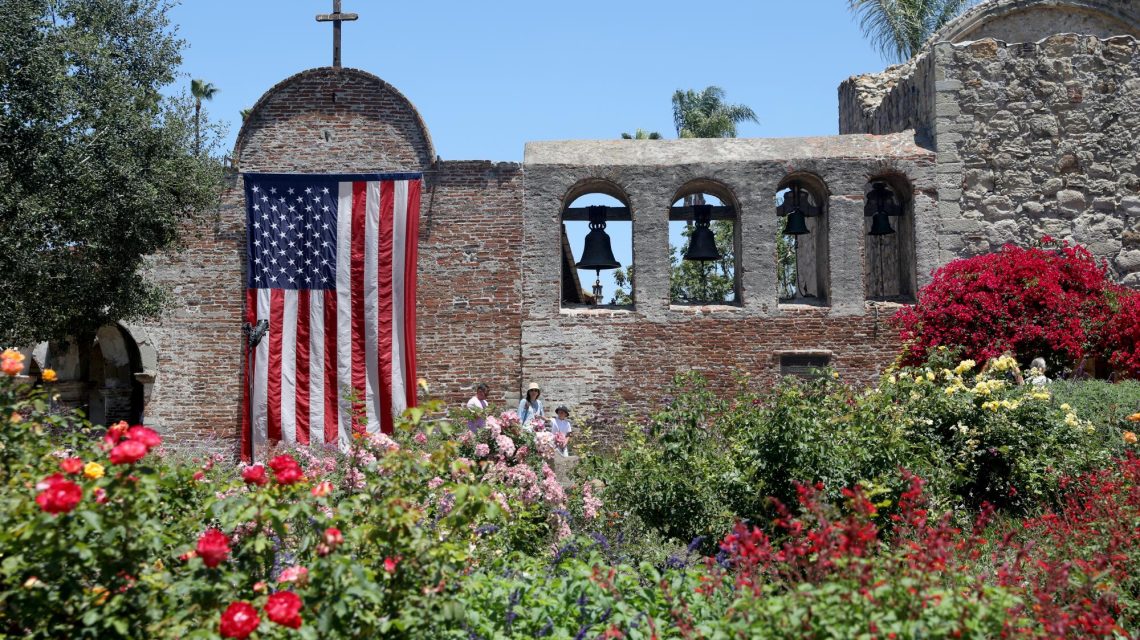
Last month, I visited San Juan Capistrano on a cloudy weekday morning. The city, home to around 35,000 people, embraces its identity as a relic of Old California, despite the sprawl of modern development. San Juan Capistrano revolves around its mission, one of the 21 missions established by the Catholic Church in the 18th and 19th centuries under Spanish rule, forming the backbone of modern California.
Even as many areas of Orange County turn more politically balanced, sections of the region have consistently shown support for President Trump. This was evident as downtown San Juan Capistrano showcased a strong sense of allegiance to Trump through decals and bumper stickers. Banners celebrated the mission’s 250th anniversary, aligning with similar national sentiments that the president has tapped into by linking heritage with loyalty to him.
The narrative surrounding Mission San Juan Capistrano reflects broader trends in Orange County, known for some of America’s more problematic traits. These include wealth-centric conservatism, suburban sprawl, and resistance to immigration and liberal ideas. The area has also been anchored in a nostalgic view of a selectively cherished past.
Visitors to Mission San Juan Capistrano can note changes in how the site’s history is portrayed, offering more complex and inclusive narratives.
When I first visited the mission in the fourth grade, the story given was simplistic. We learned that Spanish conquistadors and Catholic priests tamed wild lands, and their legacy was one to admire. However, omitted were the devastating impacts on Native Americans, who were forced into serfdom, and the tragic loss brought by introduced diseases. The noticeable decline in the swallows’ numbers, which once nested in abundance, went unexplained.
This sanitized version of history is a familiar pattern, one where current leaders sometimes distort history to celebrate select victors. Such narratives often neglect the struggles and resistance of minorities, dismissed as attempts to sow division rather than valuable perspectives on diversity and inclusion.
During my visit, I noticed the mission was quieter, allowing moments of reflection as I followed a map with audio narrations. The bright notes of Spanish guitars accompanied cheerful introductions to the “Jewel of the Missions,” a phrase coined to romanticize San Juan Capistrano.
A shift is occurring, though. Exhibits now provide a more nuanced account of history, acknowledging the environmental and social impacts of past expansions. The struggles and compromises faced by Indigenous populations, such as the Acjachemen, are now part of the dialogue. This more grounded approach challenges the rosy histories formerly told.
An echoed reminder of past impacts resonates in displays like the letter from Executive Director Mechelle Lawrence Adams, acknowledging both missionary ambitions and the adverse consequences experienced by Indigenous peoples.
Even the narrative surrounding Father Junípero Serra, canonized despite controversy over his treatment of Native peoples, draws attention to the mission’s more contentious past. The site’s portrayal now holds space for self-reflection and acknowledgment of its history, allowing for broader conversations.
The reevaluation of history in places like Mission San Juan Capistrano shows that changes can happen. As we mark significant anniversaries, there is a need for more honest reflections on our nation’s journey. Pointing to past mistakes does not detract from the love one holds for their country.
In my own family’s history, spanning five generations in Orange County, we acknowledge the struggles faced. Discrimination stories from my aunts and uncles are shared not to spread discouragement, but to illustrate resilience in their pursuit of a better life amid adversity. While some fled changing demographics, many of my family stayed, adapting and contributing to the vibrant, diverse community of today.
Change is not easy, but it is necessary. The Mission San Juan Capistrano tour passes through the ruins of the Great Stone Church, a reminder of past fragility, as it was destroyed by an earthquake in 1812. As I walked among the ruins, the fragility of democracy became starkly clear. We must work to strengthen our nation with lessons from the past to ensure its preservation for the future.
Near the mission, aromas from Heritage Barbecue drifted, drawing my attention. The restaurant recently gained national acclaim for diverse offerings that reflect the mix of backgrounds within the team. Despite initial doubts, Chef Danny Castillo’s establishment has flourished, showcasing a testament to communal diversity and persistence.
Castillo’s reflections on bringing people together, regardless of their backgrounds, are a microcosm of what is possible. At Heritage Barbecue, diners experience a shared journey—each meal a collaboration of flavors and cultures.
As Castillo mentioned, America remains a place of collaboration and creation, even as the answers to many questions are still pursued. This journey requires acceptance and learning from past challenges to shape a collective future. Efforts made every day, both big and small, contribute to a shared cultural tapestry.
 Exploring the Lucas Museum of Narrative Art
 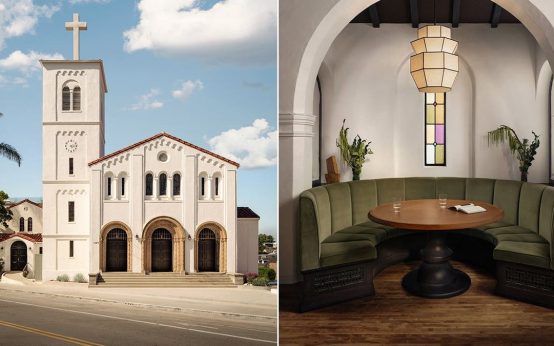 Historic Church Transformed Into Los Angeles Boutique Hotel
  Converse Apologizes and Withdraws Controversial Ad Amid Criticism
  Lucas Museum of Narrative Art Unveils in Los Angeles
 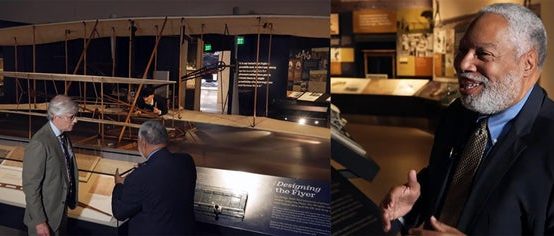 Lonnie G. Bunch III Reflects on His Legacy at the Smithsonian
  A Decade of Impact at the National Museum of African American History and Culture