NASA is preparing to save the aging Swift Observatory from re-entering Earth’s atmosphere through a rescue mission. The agency has invested $30 million in a salvage operation to boost the Swift Observatory to a higher orbit, allowing it to continue its mission of tracking significant cosmic explosions. This endeavor involves launching a robotic craft developed by startup Katalyst Space Technologies.
Mission Details
The mission starts this week with a robotic spacecraft launched from the Pacific’s Marshall Islands via a Pegasus rocket. Swift, active since 2004, faces increased descent due to intense solar activity. The plan is to elevate it to a more stable orbit quickly.
NASA’s Hubble Space Telescope is experiencing similar challenges. Ghonhee Lee, CEO of Katalyst Space, mentioned that future technology could aid in saving Hubble as well. Katalyst’s robot, still under development, might assist Hubble in the coming years.
“This is the first American space robot to undertake such a task,” said Lee. “Our mission will demonstrate a new opportunity in space technology.”
The Rescue Approach
Katalyst’s spacecraft, named Link, will spend around a month reaching and catching Swift. Additional months will be required to reposition it from 224 miles to 373 miles above Earth. Swift’s current critical altitude ranges just above 185 miles.
The Link spacecraft is equipped with three robotic arms featuring gripper-like extensions that aid in maneuvering Swift to its higher orbit. By this September, Swift might be reactivated if the mission succeeds.
NASA has taken precautions by disabling Swift’s scientific instruments, slowing its drop. The telescope ceased its observations in February, buying time for the rescue operation. The agency emphasizes the importance of the effort, with no budget allocated for Swift’s replacement.
Potential and Future Prospects
Swift’s ability to rapidly adjust its orientation allows it to capture events like gamma ray bursts. The telescope remains invaluable alongside newer observatories like the Webb Space Telescope. Success in this mission could pave the way for Katalyst’s future plans, including servicing other satellites and possibly Hubble by 2028.
Katalyst envisions a future where numerous robots perform maintenance and construction tasks in orbit, such as satellite repair and creating space infrastructures.
NASA’s astrophysics director, Shawn Domagal-Goldman, acknowledged the skepticism surrounding the mission’s feasibility, yet expressed optimism due to the significant progress made.
Nicky Fox, NASA’s science mission leader, highlighted the significance of preserving Swift, given its irreplaceable role and the lack of current funding for building a new similar telescope. Swift’s unique design enables it to quickly capture significant astronomical phenomena.
The success of the Swift mission could mark the beginning of a new era in space repair and maintenance, offering a practical solution for sustaining vital scientific resources.
 Animal Self-Medication Insights
  Carlo Rovelli’s Perspective on Physics and Ultimate Reality
 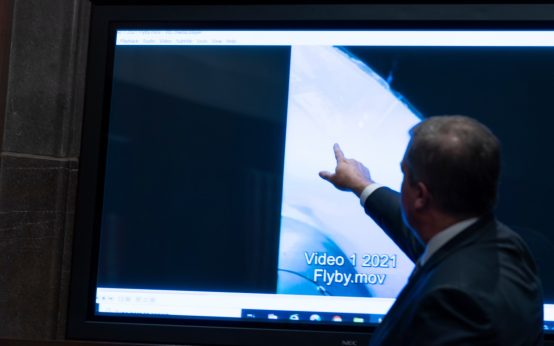 Department of Defense Legal Waiver Promotes UAP Disclosure
 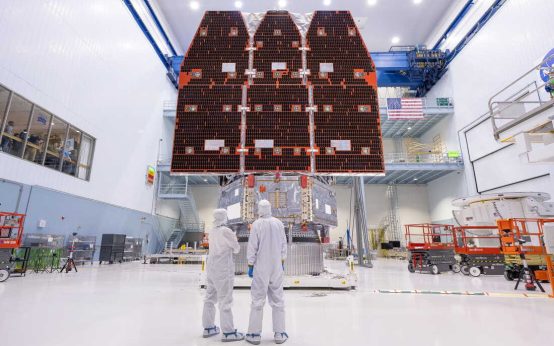 NASA’s Challenges Amid Goddard Space Flight Center Relocations
  Ancient Ring Offers New Insight on Pontius Pilate’s Authority
  Lost City Linked to Jesus Discovered Near the Sea of Galilee