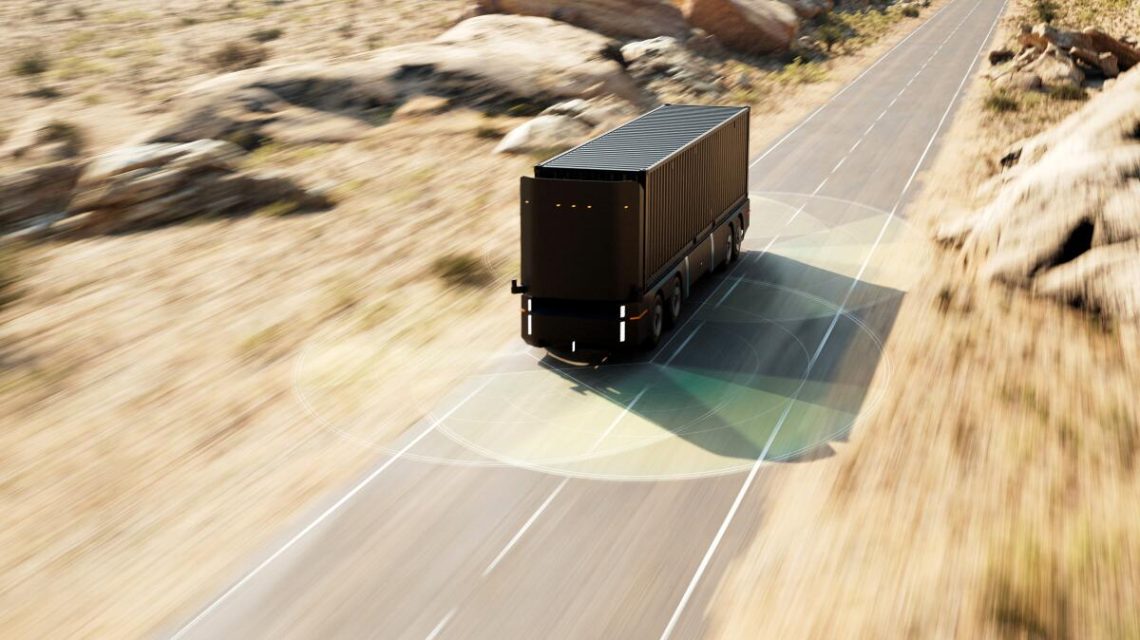
A startup based in the Bay Area is seeking to transform the traditional semitruck. Humble Robotics, founded last year in San Francisco, plans to make these gas-consuming giants electric and autonomous to enhance efficiency. The company has secured $24 million to develop a revolutionary cabless freight truck. This vehicle will lack conventional features like a steering wheel, gas pedal, and driver’s seat. Humble Robotics claims the redesigned truck will transport freight across California and other states while lowering costs and reducing carbon emissions.
Emerging from stealth mode in April, the company received seed funding, led by Eclipse Capital from Palo Alto and Energy Impact Partners. California regulations could soon allow autonomous trucks on public roads, a development Humble Robotics seeks to leverage. However, experts point out the technology faces obstacles. Labor groups like the Teamsters express concerns about safety and job impacts. “We’re building an electric autonomous platform for moving freight,” said Eyal Cohen, founder and CEO of Humble Robotics. “Our aim is to modernize this technology and provide benefits to everyone.” Cohen, with nearly two decades of experience in electric and autonomous vehicles at companies such as Uber, Apple, and Waabi, mentioned that the Humble Hauler, the company’s driverless truck, could begin pilot programs with customers within the year.
In April, California’s DMV revised regulations for autonomous vehicles, lifting a ban on trucks over 10,001 pounds. Heavy-duty autonomous vehicles must start with a human safety driver and complete 500,000 miles of testing at each certification stage. Humble Robotics has not yet applied for a DMV permit and initially planned to conduct testing in Texas. Cohen indicated the company will now focus on adapting to California’s regulations. “Our focus is now shifting back to our home state of California,” Cohen said. “We plan to work alongside the DMV to understand and comply with the latest requirements.” Humble Robotics faces competition from companies like Aurora in Pittsburgh and Kodiak in the Bay Area, which are developing trucks with traditional driving components. Omitting the front cab could lead to additional regulatory challenges, said Dan Sperling, the founding director of the Institute of Transportation Studies at UC Davis.
“Without a cab, you can’t put someone in to take over if something malfunctions,” Sperling explained.
Automated guided vehicles without cabs are already in use in controlled settings like marine ports, though these are not fully autonomous but follow predetermined routes. Humble Robotics aims to adapt cabless vehicles for public roads, particularly near busy ports like Los Angeles and Long Beach. “We seek partnerships with ports and shipping operators for initial rollouts,” Cohen said. “The Long Beach Container Terminal’s progress with technology has been promising.” The company employs fewer than 50 people and utilizes technology similar to self-driving cars. This includes radar, lidar, and cameras providing a 360-degree vehicle view. AI will assist in making driving decisions using “intelligent reasoning,” according to Humble Robotics’ website. “Cameras are our primary tool, with lidar and radar as backups,” Cohen stated.
The company did not disclose the vehicle’s production costs or its financial status. The Humble Hauler is classified as a Class 8 vehicle like traditional semitrucks. It features a universal carrying platform for various cargo sizes, including standard containers and specialized loads. It has an electric range of 200 miles with a top speed of 55 mph. While akin to long-haul vehicles, the Hauler targets shorter routes. Long-haul electric trucks face scaling challenges due to the need for large batteries. As of the previous year, zero-emission vehicles comprised approximately 23% of new medium- and heavy-duty truck sales in California, as noted by Governor Gavin Newsom’s office. California’s clean-truck voucher program allocated $165 million for incentives for Tesla’s planned electric semitruck.
“Electric technology excels for short routes, like repeated journeys between close points,” Cohen said. California is a major hub for freight trucking with over 130,000 driver jobs, accounting for 8 out of every 1,000 jobs. The removal of human drivers could significantly impact these jobs. Teamsters California, representing 250,000 state workers, strongly opposed lifting the autonomous truck ban. “Moving forward with driverless trucks endangers our roads and jobs,” stated Teamsters California. Cohen believes automated trucking won’t replace human jobs in the near term. “There are millions of Class 8 trucks. Full automation will take a long time. Current truck drivers will have jobs for their careers.” While communities are slowly accepting self-driving cars with companies like Waymo and Zoox introducing robotaxis, autonomous trucks face greater scrutiny, said Sperling.
“Seeing a massive truck without a driver could be unsettling for other drivers,” Sperling added. “The potential consequences of errors are substantial.”
 Nate Bargatze Embodies Simplicity and Trust in New Ford Campaign
  OpenAI Delays AI Model Release Over Security Concerns
  OpenAI Halts Launch of New AI Model Due to Unexpected Actions
  Trump and AI Industry Leaders Discuss Regulation at White House
  Bill Gates Expresses Concerns Over AI’s Potential Threats
  Debate on AI Regulation Delayed Beyond Midterms